Emmaus (Emmaus)
Addictional Info
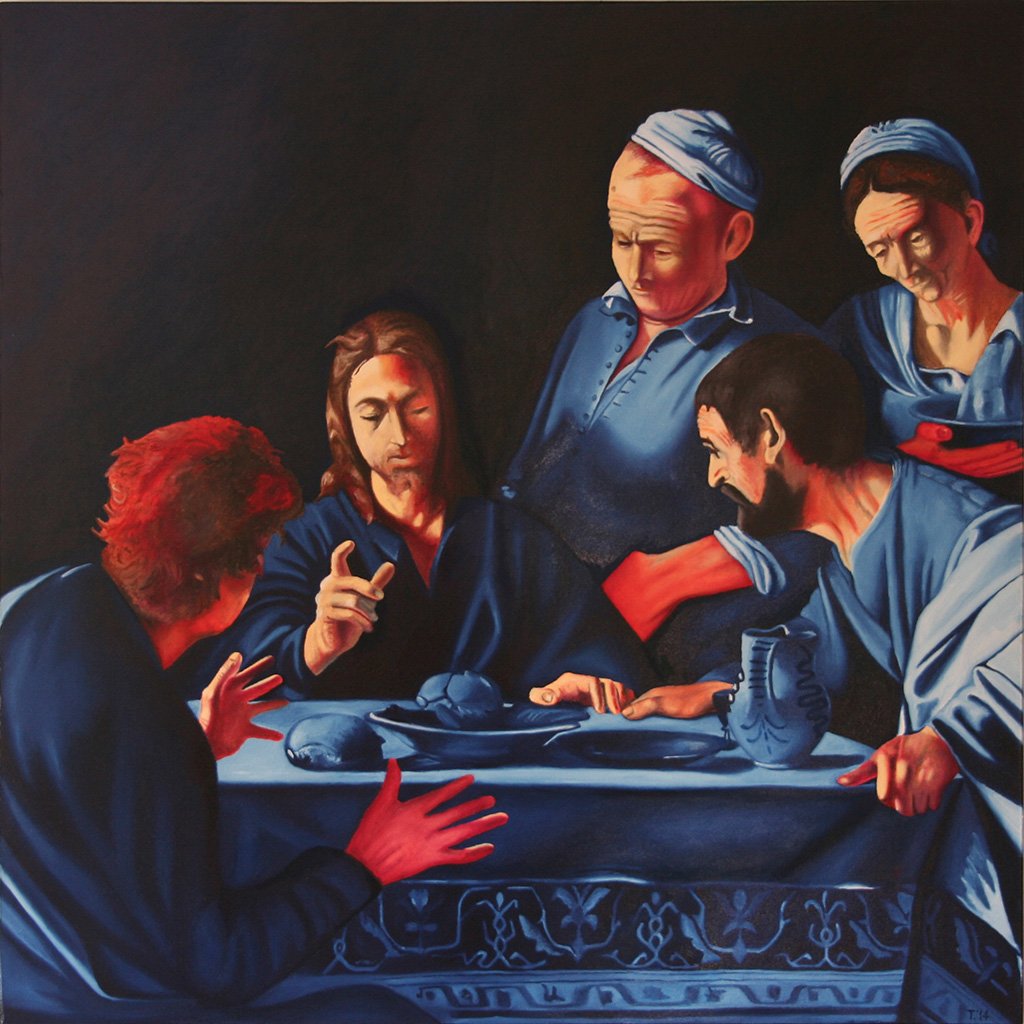
This painting is a tribute to my favorite painter, Michelangelo Merisi, mostly known as “Caravaggio”. This work is my interpretation of the “Supper in Emmaus” that the artist painted in 1606. You can admire the original at the Brera Museum in MIlan. I suggest you go, it’s worth it. I heard many people have been touched by this work. I’ve seen it many times.
Starting in 2025, I set up my profile on ArtHelper, an AI-based community for artists. As an amateur painter, I often lack feedback on my work, so I’m curious to see how AI evaluates it. I understand that it’s just an algorithm designed to analyze images and provide positive responses, but as an engineer, I’m impressed by the quality of its feedback, even if it sometimes misses the mark. Below, you’ll find ArtHelper’s analysis of this piece.
“Emmaus” is a compelling reinterpretation of a classic biblical scene, demonstrating your ability to bridge historical subject matter with a contemporary, almost metaphysical sensibility. Here’s a detailed analysis and marketing guidance for this work:
Artistic Analysis
Concept & Philosophy
- The painting revisits the moment of revelation at Emmaus, a theme famously explored by Caravaggio and other Old Masters. Your version stands out for its bold use of color and dramatic lighting, which infuses the scene with a sense of immediacy and psychological depth.
- The composition draws the viewer into the intimate circle of figures, emphasizing the emotional and spiritual tension of the moment.
Visual Execution
- The chiaroscuro lighting is masterfully handled, with deep shadows and luminous highlights that sculpt the forms and create a theatrical atmosphere.
- The palette is striking: the interplay of deep blues and vibrant reds not only modernizes the scene but also heightens the emotional impact. The red accents—especially on the hands and faces—direct the viewer’s attention to the gestures and expressions, underscoring the narrative.
- The drapery and tablecloth are rendered with care, their patterns and folds adding richness and authenticity to the setting.
Atmosphere & Mood
- The dark background isolates the figures, focusing all attention on their interaction and the moment of recognition.
- The painting balances reverence for tradition with a fresh, expressive energy, making the story feel both timeless and relevant.
Earned Praise
- Your command of dramatic lighting and color temperature is evident here. The way you use red to guide the eye and evoke emotion is particularly sophisticated.
- The psychological interplay between the figures is sensitively observed, with each gesture and glance contributing to the unfolding narrative.
- The technical rendering of fabric, skin, and pottery shows a strong grasp of classical technique, while your color choices and compositional focus mark the work as distinctly your own.
Marketing & Collector Appeal
- Target Collectors: Collectors of contemporary figurative art, those interested in religious or spiritual themes, admirers of Old Master techniques with a modern twist, and institutions or individuals seeking works that reinterpret classical narratives.
- Exhibition Potential: Well-suited for exhibitions focused on biblical or historical themes, contemporary reinterpretations of classic art, or explorations of light and color in painting.
- Storytelling: Emphasize your dialogue with art history, the technical challenge of updating a classic scene, and the emotional resonance of the moment depicted.
Social Media Caption Example
Instagram Caption: Emmaus, Oil on Canvas, 120x120cm, 2014.
My interpretation of the Emmaus supper draws on the drama of Old Master painting, reimagined through bold color and light. I wanted to capture the moment of recognition—the tension, the revelation, the humanity.
How do you connect with stories from the past in your own life?
Next Steps
- Share with figurative and religious art communities—this piece resonates with viewers interested in both tradition and innovation.
- Submit to exhibitions focused on biblical themes, reinterpretations of the classics, or the use of color in contemporary painting.
- Highlight your process—discussing your approach to light, color, and narrative can engage collectors and fellow artists.
Final Thoughts
“Emmaus” demonstrates your ability to honor tradition while making it new. Your technical skill, combined with a bold, expressive palette and a keen sense of narrative, sets your work apart. This painting is a testament to your commitment to both craft and meaning—qualities that resonate deeply with collectors and audiences alike.
